
Author Q&A with Henry Neilsen
Author Q&A with Henry Neilsen
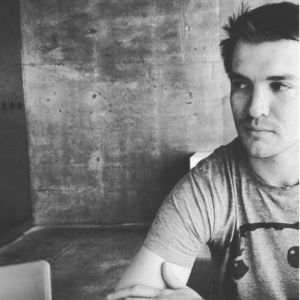
Henry Neilsen is an indie author from Melbourne, Australia. His full-time job is a sustainable design consultant in an engineering firm, where he models buildings and simulates their energy use to make them more environmentally friendly. When he isn’t writing or working, he is a keen competitive rower who has competed at the Australian national championships. He writes speculative and science fiction, or at the very least stories with a speculative bent to them.
His new book, SPICE TRADER, is out now on Kindle and Smashwords, along with other major ebook retailers. You can follow him on twitter, reddit, or instagram or subscribe to his mailing list for more updates on his work.
1. Tell us about your writing/ published book(s)
SPICE TRADER is a novel that follows three friends who live a hedonistic lifestyle full of drugs and alcohol. One of them finds instructions to create “Spice”, a newly discovered party drug that isn’t addictive and has no negative side effects. After a shocking incident reveals the dangerous lives they’ve been living, they decide to start manufacturing Spice for themselves in an attempt to leave their self-destructive lifestyles. As it turns out, making the decision to leave isn’t easy, and the demons of your past will come back to haunt you.
ELEANOR’S MIND was my debut self-published work, a techno-thriller short story. It follows Eleanor, a woman who has been gravely injured in a car accident. She’s had her mind transferred to a computer in an experimental procedure to keep her from going brain dead, but the team of technicians working to keep her alive don’t really know what they’re doing, and have to solve problems with her consciousness in real-time.
There’s also SUNWARD SKY, an Audio Fiction podcast which follows Alyssa as she boards a spacecraft that maintains the ever-growing number of automated satellites in Earth’s orbit. Space travel is a dangerous task that is now treated as menial labour, mainly due to a degenerative disease that occurs after too long in space. There seems to be a conspiracy aboard the spaceship, and each week Alyssa finds out more about what’s happening with the crew. Season one is now complete, with the second season hopefully coming out late this year or early next.
2. How do you approach starting a new book?
In all instances, it starts with a scene. I usually just write this scene out, whether it’s climactic, or a bit of exposition, or whatever it is. Then I have to figure out what the scene is there for, and who the characters are, and all the other stuff that goes along with the story. Once I have a rough idea of that, I start writing the book. I don’t have a set structure, so the story will often wend away from the original idea, but that’s fine. I find that if I try to force a narrative path too hard it becomes staid and less believable.
3. What advice would you give to someone wanting to write their first book?
Don’t stretch yourself! It’s creatively exhausting, and burning yourself out by trying to crunch out thousands of words day after day is hard! Set a minimum word limit, but set a maximum as well, mine was 600-800 words per day. That way, if the writing wasn’t coming along great I could just stop at 600, but if my creative juices were really flowing, I forced myself to stop at 800 words. That way, I was excited to get on the next day and keep writing! I know there are competitions where you are supposed to write large word counts in short amounts of time, and they can be great, but I always found them exhausting and I didn’t enjoy it after a while. Limiting my output keeps me happy and engaged with the work.
Also, if you’re self-publishing I’d highly recommend releasing a shorter work first so you can learn the ropes of the self-publishing world and where you sit in it. It’s big, and it’s confusing, and it’s a lot easier to stomach a stuff-up on a short story than your magnum opus!
4. Do you do research for your books? If so, what kind of research?
DRUGS. Seriously, the amount of research I did into illicit drugs for Spice Trader is a little scary. My search history is definitely on a list somewhere! I looked up different combinations, what stimulants actually do to your brain, how drug trades happen, and all sorts of other little facts. There’s a lot to know, and a lot I really didn’t want to know. I do find out a lot of cool stuff though (for example, caffeine is a very close relative of cocaine. And caffeine makes you hallucinate very slightly!).
I do a fair bit of high level research for my stories, just because they’ve often got a technology bent to them and I want them to sound plausible, even if they aren’t totally realistic. I did stuff up a bit on the podcast; I was running behind so I made my best guess as to how GPS satellites worked and recorded that. As it turns out I couldn’t have been more wrong, and I was contacted by someone on reddit telling me my mistake! I’ve actually published a bonus podcast episode called “Errata” where I go back and poke a bit of fun at myself for all the stuff I got wrong in the first season.
5. How do you approach ‘world building’?
There are two ways to answer that question. The first is “I don’t”. What I mean by that is I don’t sit down and draft a map, or come up with items or complex backstories for things. In that sense, I don’t worldbuild.
In the other sense, my worldbuilding goes back to theme. The world the characters exist in has to link back to the thematic character of the book, otherwise the world is basically decoration. There are a lot of very fun science fiction series (that I love reading) that have the former kind of worldbuilding but not the latter, and while there’s a huge amount of lore and depth to the stories, there’s not a lot of “meat” to get into when you’re trying to come to terms with what the story is trying to say. So when I go back to my second (or third, or fourth, or fifth) draft, I try to make sure that the world my characters are in, even if it’s fairly contemporary, fits with the idealistic background that the story is built upon.
6. Tell me about your main character
I’ll talk about the main character, Pete, from Spice Trader. He’s… a bit of a loser, honestly. He’s quite a thoughtful guy, and he’s not stupid, but he’s lazy and he’s just followed the easiest path in his life up until this point in the story. Whatever makes him feel good in the moment, he’ll do, and as soon as he gets bored of it he’ll abandon it. This has led him to a dead-end job and a dead-end life, taking party drugs and just living for the weekend. At some point in the book he realises he doesn’t want to be that person anymore, but I think there’s a realisation there that he can never really escape his past actions. The decisions he makes in his life mark him forever, and I think trying to come to terms with that is very difficult for him to handle.
*Affiliate Link*
*Affiliate Link*
I’ve read Eleanor’s Mind and can highly recommend it.
A truly fascinating and gripping story. When Eleanor is involved in an accident she finds herself at the centre of a cutting edge science experiment. At times I found the story a little technical and didn’t understand but that was okay – it was necessary to demonstrate the science. I couldn’t put this book down once I started it and the end is one that will surely stay with me.
You can find Henry on Twitter.

You May Also Like
Author Q&A with Christopher P. Mooney

Author Q&A with Jon Hartless