
Author Q&A with Sasha Greene
Author Q&A with Sasha Greene
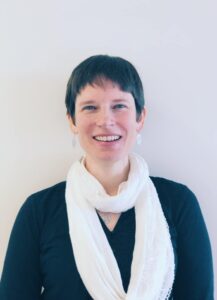
Sasha Greene is a writer and computer programmer who lives in Scotland. Her first novel Something Like Happy is a love story set in Glasgow against a backdrop of mental health. Sasha is also an adaptive snowboard instructor, which involves passing on her love of snow and going fast down a hill to people with physical and mental challenges. You can find her website at www.sashagreene.com, or follow her on Twitter @sashagreeneauth.

1. Where’s your favourite place to write?
I often write sitting up in bed. I have Mondays off from my day job and usually I will wake up, bring some breakfast back to bed and then when I’ve finished eating I will open my laptop and write. This saves me from being distracted by all the household chores that are waiting for me downstairs…
2. How do you approach starting a new book?
I used to just try and get words onto the page but the more I wrote the more I realised that if I know where I’m going (at least in a vague sort of way) then the quality of my writing is much better. So I tend to write myself a one-page synopsis before I even start the book and then write the first couple of thousand words so I can meet the characters and see if it’s all going to work as an idea. This also lets me check with my editor at an early stage that what I have works for her too.
3. How do you choose your book’s title(s)?
I usually have a working title for what I’m writing, but I don’t expect that it will end up as the final one. My working title for Something Like Happy was The Happy List as the theme of the book is a list of simple things which Jade shows to Nick to try and convince him that life is worth living, but my publisher suggested the title Something Like Happy and I like it so much better. The two books I’m working on at the moment are in the same series so I’ve given them the working titles Something Like Trust and Something Like Memories, but this may not be what they eventually get called!
4. Do you do research for your books? If so, what kind of research?
I did a lot of research for Something Like Happy because it deals with mental health issues and I wanted to treat it authentically and with a great deal of respect, as it’s a topic which has an impact on so many people’s lives. Similarly, with the two books I am working on one covers PTSD and the other deals with the impacts of dementia so they are both things that I really want to get right. I read a lot of books and articles, follow people on Twitter, watch documentaries, and talk to people about their experiences. I am so grateful for all the people who have been willing to talk about their mental health and my writing wouldn’t be the same without them.
5. How do you handle criticism?
I really value criticism, if it comes from the right person and is given in the right way. There are so many people who have given me feedback along my writing journey and I wouldn’t be where I am without them. That said, it is always important to remember that a person’s criticism is still coming from their perspective and to recognise the limitations of that. For example, an agent or publisher may have a different vision for my book from the one I have, which could be based on what they know will sell in the current market. And a reader may just not identify with my characters. That doesn’t mean that an idea is wrong, although it does always make me go back and reconsider things and check that I really believe I’m on the right track. But in the end it’s up to me to take the advice and work out which bits to keep and which are not right for me and find out how to keep learning and improving my writing.
6. What advice would you give to someone wanting to write their first book?
I have heard the same thing said in many different ways and it’s that you can’t edit an empty page. So many people start writing a book and never finish it, and I think just going through the process of planning and writing a whole story is incredibly valuable, so even if you’re not sure if something is good you should still try and get that first draft down on paper and then you can start looking at it and work out how to improve it. Some people say you should write every day, but I think it’s really important just to find a routine that works for you. I started off trying to write every day but I found out that writing on my day off suits me so much better because I treat it like a day at work and just knuckle down and get on with things. It also helps me with writers block because I spend time thinking about the story dring the week so when I actually get around to writing then I rarely seem to get stuck.
*Affiliate Link*


One Comment
Tracy Gow
Lovely post Sasha!